Top EV High Voltage Silicone Cable Suppliers?

Time:2026-10-28 Author:Charlotte
0%

Choosing the right EV High Voltage Silicone Cable supplier is not a simple price comparison. It is a reliability decision made under heat, vibration, moisture, and repeated electrical stress. In an electric vehicle, a cable may run close to battery modules, inverters, motors, or sharp aluminum housings. Small defects can become expensive failures.

Dr. Michael Pecht, a recognized reliability engineering specialist, offers a useful principle for this market: “Reliability must be designed in, not inspected in.” That sentence deserves attention. A dependable supplier should demonstrate more than a glossy catalog. Buyers should examine conductor materials, silicone formulation, insulation thickness, voltage ratings, temperature ranges, bend performance, shielding methods, and traceability records. Factory testing also matters. Look for insulation resistance checks, spark testing, aging evaluations, and documented quality controls.

This guide compares leading EV High Voltage Silicone Cable suppliers through practical criteria. It considers engineering capability, customization, production consistency, certification evidence, delivery support, and field experience. A supplier with impressive samples may still struggle with batch stability. That is easy to overlook.

The evaluation is not perfect. Public information can be incomplete, and supplier claims require independent verification. Samples should be tested in realistic conditions, including tight bends, thermal cycling, coolant exposure, and connector movement. Cost matters, but replacement labor and vehicle downtime matter more. The strongest supplier is not always the largest one. It is the company that can explain its materials clearly, prove its process control, and respond when the application changes.
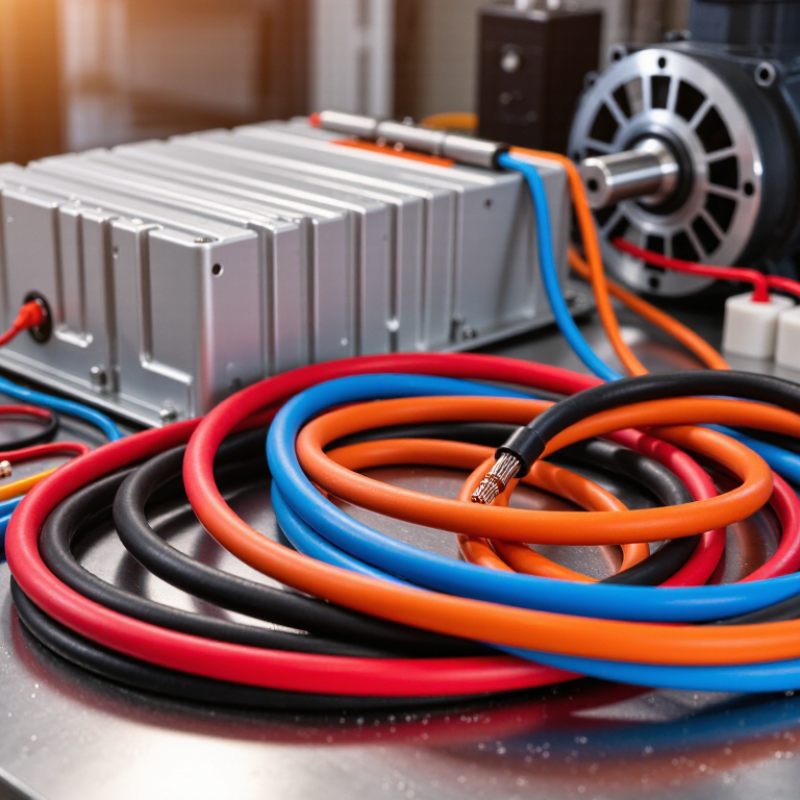
Top EV High Voltage Silicone Cable Suppliers?

What Are EV High-Voltage Silicone Cables?

EV high-voltage silicone cables are insulated conductors designed to carry substantial electrical power between battery packs, inverters, motors, and charging systems. They commonly use copper or tinned copper strands, silicone insulation, shielding, and an abrasion-resistant outer layer. Silicone remains flexible across wide temperatures. That matters near battery enclosures and motor compartments, where heat, vibration, and tight bends occur together.

Many electric platforms operate around 400 volts, while newer systems approach 800 volts. The International Energy Agency reported nearly 14 million electric car sales in 2023, representing about 18% of global car sales. This expansion increases demand for cables that remain stable during repeated charging and rapid acceleration. A practical cable should resist coolant, oil, ozone, moisture, and electrical tracking. Its bend radius also matters. A stiff cable can stress terminals hidden behind a sealed battery cover.

Silicone is not automatically the best choice. It can offer excellent thermal flexibility, but some formulations need stronger protection against cuts and abrasion. That assumption deserves testing. Engineers should review voltage ratings, continuous-current performance, shielding effectiveness, flame behavior, and validation results under vibration. The IEC 60664 insulation-coordination framework can support electrical-clearance decisions, while ISO 19642 provides relevant automotive cable requirements. Supplier claims still need verification through heat-aging, bending, and high-voltage insulation tests. The smallest connector detail can determine long-term reliability.

Which Standards Govern Their Safety and Performance?

The rapid EV market makes cable qualification more demanding. The IEA’s Global EV Outlook 2025 reports more than 17 million electric cars sold worldwide in 2024. That growth increases pressure on high-voltage cable suppliers. Safety cannot rely on marketing claims alone.

ISO 19642 defines automotive cable dimensions, materials, and test methods. ISO 6722 remains relevant for road-vehicle cable construction and temperature classes. For charging systems, IEC 62893 addresses electric vehicle charging cables. IEC 60228 specifies conductor classes and resistance requirements. UN ECE R100 also governs electrical safety within vehicle approval frameworks. These standards examine insulation, voltage endurance, abrasion, heat aging, bending, and flame behavior. Shielding performance matters too, especially near inverters and battery packs.

A supplier should provide traceable test reports, not only certificates. Ask for conductor resistance data at operating temperature. Review partial-discharge testing when insulation systems operate above 1,000 volts. Check whether samples came from regular production. Laboratory prototypes can look perfect.

Tips: Compare the cable’s rated voltage with the vehicle’s real transient voltage. Inspect bend radius, shield termination, and connector compatibility. Request batch-level inspection records. Verify standards by edition and test scope. A certificate may cover one construction, not every length or jacket material. That distinction is easy to miss. Even good testing has limits, so field validation remains necessary.

What Qualities Define a Reliable Silicone Cable Supplier?

A reliable silicone cable supplier for EV high-voltage systems proves capability through evidence, not polished claims. Ask for test reports covering insulation resistance, voltage endurance, thermal aging, flame behavior, and bend cycles. Reports should identify cable size, silicone compound, test temperature, duration, and laboratory conditions. Vague certificates are warning signs. Real engineering leaves a paper trail.

Experience appears in practical details. Suppliers should explain conductor stranding, shielding, wall thickness, sealing, and routing near hot battery components. They should provide samples for crimping and repeated flex tests. During evaluation, inspect the cable after exposure to coolant, oil, vibration, and freezing temperatures. A dependable supplier welcomes questions and responds with measured data. Fast replies alone prove little.

Quality control must continue beyond the first shipment. Look for traceable batch numbers, incoming-material checks, extrusion records, and final electrical testing. Ask how nonconforming reels are isolated and corrected. Delivery consistency matters when production schedules are tight. No supplier gets every detail right. A transparent partner admits limits and documents corrective action. I would also compare samples from different batches, because one excellent reel can hide unstable process control. That extra check may feel slow, but it protects vehicles, technicians, and long-term field performance.

Who Are the Leading EV High-Voltage Silicone Cable Suppliers?

Leading EV high-voltage silicone cable suppliers usually fall into three groups: specialized silicone cable manufacturers, automotive wire producers, and custom high-voltage harness suppliers. The strongest partners combine stable silicone compounding with precise extrusion control. They understand how cables behave near inverters, battery packs, and electric motors.

In practical supplier reviews, I examine insulation thickness, conductor flexibility, shielding quality, and bend performance. I also request temperature-cycle data, voltage endurance results, flame testing, and abrasion reports. A capable supplier should provide lot traceability and clear production records. Automotive quality systems and documented process controls add confidence, but paperwork alone proves little.

Real experience matters.

Leading suppliers can explain failure risks without hiding limitations. They should discuss silicone swelling, connector sealing, surface damage, and installation mistakes. Some suppliers offer standard cables, while others develop custom jacket dimensions, colors, and shielding structures. Custom support often reduces assembly problems, especially in tight battery compartments.

No supplier is perfect. I would question any company promising zero defects or universal compatibility. Sample testing under vibration, heat, moisture, and repeated bending remains essential. A supplier may pass laboratory tests yet perform poorly in a crowded vehicle bay. The better choice is a technically open manufacturer that shares test methods, accepts feedback, and improves its process when field evidence challenges its assumptions.

Top EV High-Voltage Silicone Cable Suppliers? — Key Technical Selection Criteria

EV high-voltage silicone cable selection is commonly based on system-voltage class and insulation temperature capability. The reference values below represent widely used EV electrical architectures and silicone-insulation operating limits; they are technical benchmarks rather than company or brand rankings.

How Should Buyers Compare Suppliers and Cable Options?

Comparing high-voltage silicone cable suppliers requires more than checking price lists. The IEA’s Global EV Outlook 2024 reported nearly 14 million electric car sales in 2023, representing about 18% of global car sales. That growth increases pressure on cable reliability, delivery capacity, and technical support. Buyers should request verified voltage ratings, temperature ranges, current capacity, bending radius, and shielding details. Ask for evidence.

Silicone insulation performs well in heat, vibration, and repeated movement. However, it may cost more and show weaker abrasion resistance than some thermoplastic alternatives. Compare the actual application, not only the material name. A cable for a battery pack may need flexible conductors, orange identification, electromagnetic shielding, and stable performance near 150°C. Suppliers should provide test reports linked to relevant automotive and electrical standards, including conductor resistance, insulation aging, flame behavior, and high-voltage withstand testing.

Traceability matters. Each production lot should connect to raw-material records, test results, and clear revision control. Request samples with realistic lengths, terminals, bending cycles, and thermal exposure. A polished sample can hide production variation. That is an uncomfortable possibility. Also compare minimum order quantities, tooling charges, replacement policies, and technical response times. The best supplier is not always the cheapest. A lower unit price becomes expensive when insulation cracks, connectors overheat, or delivery slips. Buyers should score suppliers using documented evidence, while leaving room for re-testing after design changes.

FAQS

What evidence should a reliable silicone cable supplier provide?

Request reports on insulation resistance, voltage endurance, thermal aging, flame behavior, and bend cycles.

Why are samples important during supplier evaluation?

Samples reveal crimping quality, flexibility, sealing performance, and repeated-bend durability.

Which cable construction details should a supplier explain?

The supplier should explain conductor stranding, shielding, wall thickness, sealing, and routing near hot battery components.

How can buyers assess ongoing quality control?

Look for batch numbers, incoming-material checks, extrusion records, and final electrical testing.

What makes a supplier experienced with vehicle high-voltage systems?

Experienced suppliers understand cables near inverters, battery packs, and electric motors.

Are automotive quality systems enough to select a supplier?

No. Documented systems increase confidence, but paperwork alone proves little.

Can custom cable support reduce assembly problems?

Yes, custom jacket dimensions, colors, and shielding structures may improve installation in tight battery compartments.

How should buyers judge supplier communication and limitations?

A dependable supplier answers with measured data and admits technical limits.

Conclusion

Ev High Voltage Silicone Cable is a specialized cable designed to transfer electrical power safely and efficiently in electric vehicles, especially between batteries, inverters, motors, and charging systems. Its silicone insulation provides excellent flexibility, heat resistance, vibration tolerance, and durability in demanding automotive environments. Reliable products should also offer stable electrical performance, strong insulation, flame resistance, and protection against moisture, chemicals, and mechanical stress. Safety and performance should be evaluated according to applicable automotive, electrical, environmental, and fire-resistance standards.

When selecting a supplier, buyers should examine manufacturing experience, quality-control procedures, material consistency, testing capabilities, customization support, production capacity, and delivery reliability. Comparing cable options should include voltage and temperature ratings, conductor structure, insulation thickness, flexibility, bending performance, shielding requirements, connector compatibility, and total cost of ownership. The most suitable supplier is not necessarily the one offering the lowest price, but the one that can provide dependable documentation, consistent quality, responsive technical service, and cable solutions matched to the vehicle’s operating conditions.


Charlotte

Charlotte

Charlotte is a seasoned marketing professional with a deep understanding of the company's portfolio and a passion for elevating its presence in the market. With a keen eye for detail and a commitment to excellence, she ensures that our professional blog is regularly updated with insightful articles......