How to Choose the Right PVC Cable for Your Project?

Time:2026-09-23 Author:Ethan
0%

Choosing the right Pvc Cable is not simply a matter of matching color, price, or conductor size. A cable that looks suitable on a supplier’s website may overheat inside a crowded conduit. It may also suffer excessive voltage drop across a long workshop run. The correct choice depends on load current, rated voltage, conductor material, insulation temperature, installation method, bending frequency, and exposure to moisture or chemicals.

Industry demand supports careful selection. Grand View Research’s 2024 Wire and Cable Market report identifies construction, power, and telecommunications as major application sectors. These environments create very different cable requirements. A fixed residential circuit may need a rigid PVC-insulated cable, while a control panel door may require a more flexible construction. The IEC 60227 series provides important requirements for PVC-insulated cables up to 450/750 V. Regional rules, including national wiring codes and product-marking requirements, must also be checked before purchase. Compliance is not optional.

Small details matter.

Begin with the equipment’s full-load current, then verify the cable’s ampacity under actual ambient temperature and grouping conditions. Check voltage drop, especially for pumps, motors, and distant lighting circuits. For outdoor or industrial locations, review UV resistance, water exposure, flame performance, and mechanical protection. PVC is practical and economical, but it is not ideal for every temperature or chemical environment. That limitation deserves attention. A cheaper cable can become expensive after premature failure, downtime, or replacement work. Reliable selection combines manufacturer datasheets, recognized testing, qualified engineering review, and the real conditions at the installation site. There is no universal “best” cable—only the best documented choice for a specific project.
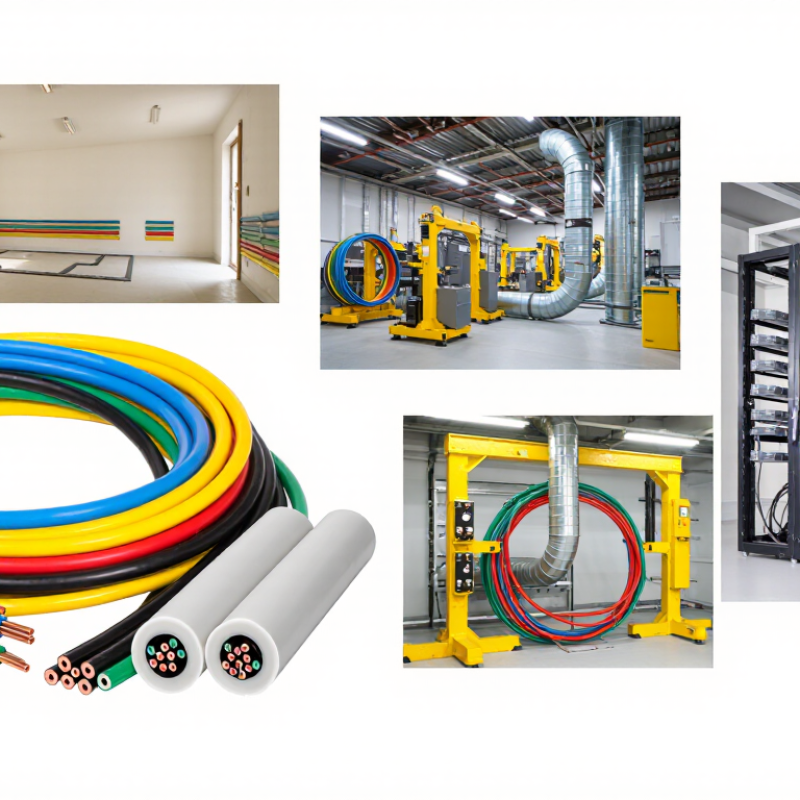
How to Choose the Right PVC Cable for Your Project?

Understanding PVC Cable Types and Their Core Applications

Choosing PVC cable starts with understanding its construction, not its color or price. Start with the load. A solid-core PVC cable suits fixed indoor wiring because it stays firm under terminals. A stranded cable bends more easily around panels, motors, and compact enclosures. Flexible PVC cords are better for equipment that moves, although repeated bending can still cause fatigue. The conductor size must match current, installation method, and allowable voltage drop. A quick guess is not enough.

PVC insulated cable is commonly used for lighting, sockets, and control circuits. PVC sheathed cable adds mechanical protection and helps resist moisture in ordinary locations.

Twin-core versions fit simple single-phase circuits, while multicore control cables keep several signals organized. For industrial settings, select insulation and sheath ratings for heat, oil, sunlight, and chemicals.

Moisture changes everything. A cable rated for a dry wall may fail early beside a pump or outdoor junction box. Check the voltage rating, conductor temperature, flame behavior, and applicable installation standard before ordering.

In practice, compare the cable’s printed markings with site conditions, then verify the expected current with a qualified electrician or engineer. Measure the route, including bends and service loops; a short-looking path often needs extra length. Do not hide weak assumptions behind a larger cable.

Oversizing may complicate terminals and raise cost, while undersizing can create heat. Not always. PVC is versatile, but it is not ideal for every environment or repeated flexing cycle. A careful choice considers cable type, core count, conductor size, protection, and future maintenance access.

Matching Cable Size to Voltage, Current, and Installation Conditions

How to Choose the Right PVC Cable for Your Project?

Matching a PVC cable to voltage and current requires more than reading its diameter. The conductor must withstand the operating voltage without insulation breakdown. Its cross-sectional area must also carry the expected current safely. Check the cable’s voltage rating, conductor material, and allowable temperature before installation.

Current capacity changes with real conditions. A cable inside a warm conduit may carry less current than one installed in open air. Bundled cables also produce extra heat. Long runs need attention to voltage drop, especially in motors, pumps, and outdoor lighting.

Measure the route length, calculate the load, and compare the result with local electrical requirements. Do not choose by appearance alone. A thick outer jacket can hide an undersized conductor.

Installation conditions often expose weak assumptions. Damp locations may require suitable insulation and sealed connections. Direct burial needs mechanical protection and approved cable construction. Sharp bends can damage PVC insulation, even when the cable looks undamaged. Leave enough space in conduits for pulling and heat dissipation.

I have seen projects fail because the calculated current ignored starting loads. That mistake is easy to repeat. Review continuous loads, ambient temperature, grouping, and future expansion with a qualified electrician. Check the actual installation rather than trusting a catalog value.

Evaluating Insulation, Sheathing, and Environmental Resistance

How to Choose the Right PVC Cable for Your Project?

Evaluating Insulation, Sheathing, and Environmental Resistance

Choosing a PVC cable starts with the insulation, not the color or price. Insulation surrounds each conductor and prevents current leakage, heat damage, and accidental contact. Check the cable’s rated voltage and operating temperature against your equipment. A cable rated for indoor lighting may fail near a hot motor. Measure the route carefully. Tight bends can stress insulation over time.

The outer sheath handles a different job. It protects the cable from abrasion, moisture, oils, and mild chemicals. For a workshop floor, choose a sheath with strong mechanical resistance. For an outdoor run, confirm its resistance to sunlight and rain. PVC performance changes with temperature. In cold conditions, some sheaths become stiff and crack during installation. That detail is easy to miss.

I once focused too heavily on conductor size and overlooked the installation environment. That was a poor judgment. Review the technical datasheet, not just the product description. Look for flame behavior, bending limits, conductor construction, and applicable test standards. In damp areas, inspect the cable entry points and seals as carefully as the cable itself. Water often enters at connections, not through the sheath. Leave enough slack for maintenance, but avoid loose loops that collect water or suffer repeated movement.

How to Choose the Right PVC Cable for Your Project?

Evaluating Insulation, Sheathing, and Environmental Resistance

These standard-based reference values compare common PVC cable categories. PVC-insulated cables typically have a maximum continuous conductor temperature of 70°C, while PVC power cables covered by IEC 60502-1 commonly allow a 160°C maximum conductor temperature during short-circuit conditions.

When selecting a cable, verify the rated voltage first, then confirm the insulation temperature rating and choose a PVC sheath suitable for moisture, oil, sunlight, chemicals, abrasion, and the required installation temperature range.

Checking Safety Standards, Flexibility, and Long-Term Durability

How to Choose the Right PVC Cable for Your Project?

Safety standards should guide every PVC cable decision. IEC 60227 covers PVC-insulated cables rated up to 450/750 V. IEC 60332-1-2 evaluates vertical flame propagation. These references help engineers compare insulation performance, conductor construction, and fire behavior. The IEA Electricity 2024 report forecasts global electricity demand growth of about 4% in 2024 and 2025. More installations increase the cost of weak specifications. A cable must match the system voltage, installation method, ambient temperature, and expected load.

Flexibility matters during routing. Class 5 or Class 6 conductors usually bend more easily than solid conductors. Check the manufacturer’s minimum bending radius, not only the cable diameter. Tight corners can stress insulation and loosen terminations. Field inspections often reveal this mistake. The cable looked suitable.

Long-term durability depends on heat, moisture, ultraviolet exposure, chemicals, and repeated movement. PVC insulation can harden when exposed to excessive heat for long periods. Select the correct temperature rating, sheath type, and environmental classification. The NFPA report on home structure fires identifies electrical distribution and lighting equipment as a major source of electrical failure-related fires. That evidence supports careful sizing and connection testing. Still, standards cannot fix poor installation. A perfect datasheet does not guarantee a perfect result. I would review the route again, especially where cables pass through warm, crowded, or sharp-edged spaces.

Selecting the Best PVC Cable for Your Project Requirements

Selecting the best PVC cable starts with the project, not the catalogue. Record the voltage, current, route length, ambient temperature, and installation method. A cable inside a warm conduit needs more attention than one clipped in open air. PVC insulation commonly supports conductor temperatures near 70°C, but the exact rating depends on its construction and standard. Check voltage-drop calculations, too. A long run may need a larger conductor, even when the current appears acceptable.

The International Energy Agency’s Electricity 2024 report recorded 2.2% global electricity-demand growth in 2023. It forecasts about 4% annual growth from 2024 through 2026. The IEA’s World Energy Investment 2024 report also expects total energy investment to exceed 3 trillion US dollars. These figures suggest more wiring work, but demand alone should not decide cable selection. Choose copper or aluminium after considering conductivity, weight, termination quality, and maintenance access. For outdoor or buried routes, inspect moisture resistance, mechanical protection, UV exposure, and approved sheath performance. IEC 60227 or IEC 60502 may apply, depending on the cable’s voltage class. I have seen projects fail through rushed derating checks. That mistake is avoidable.

Tips: Match the cable to its real environment. Read the full datasheet. Confirm local code requirements. Ask an electrical engineer to verify heat grouping and voltage drop. Leave a practical margin, but do not oversize blindly; larger cables can complicate bending, terminals, and installation. Recheck the design before ordering.

FAQS

How should I match a PVC cable to voltage and current?

Check the voltage rating, conductor material, cross-sectional area, and allowable operating temperature. Diameter alone can mislead.

Why can a cable carry less current inside a conduit?

Heat cannot escape easily inside warm conduits. Bundled cables create additional heat and may reduce allowable current.

How does cable length affect the selection?

Long cable runs can cause voltage drop. Measure the route and check the load, especially for motors, pumps, and outdoor lighting.

What installation conditions should I review before choosing a cable?

Consider ambient temperature, grouping, moisture, bending, conduit space, and future load expansion. Real conditions matter.

Can a thick outer jacket hide a weak cable?

Yes. A thick sheath does not prove that the conductor is large enough. Check the technical datasheet.

What should I inspect in the insulation and outer sheath?

Confirm voltage, temperature, bending limits, flame behavior, and resistance to moisture, abrasion, sunlight, oils, and mild chemicals.

Is PVC suitable for every outdoor or damp installation?

Not automatically. Confirm the cable construction and environmental rating. Use sealed entries and connections where moisture may enter.

What common mistake can cause cable failure?

Ignoring starting loads is a common error. A motor may draw much more current briefly, so review startup conditions carefully.

Conclusion

Choosing the right Pvc Cable begins with understanding the different cable types and their intended applications, such as power distribution, control systems, equipment wiring, or indoor and outdoor installations. The cable size should match the required voltage and current while also considering installation conditions, including ambient temperature, cable length, bundling, mechanical stress, and exposure to moisture or chemicals. Proper sizing helps reduce energy loss, overheating, and premature failure.

It is also important to evaluate the insulation and sheathing materials for resistance to heat, abrasion, oil, water, and sunlight. Check that the cable meets the relevant safety and performance standards for its intended use, and consider flexibility when the installation involves movement, tight bends, or limited space. A durable Pvc Cable should provide reliable electrical performance over time, remain easy to install, and withstand the expected environmental conditions. By comparing these factors with your project’s technical and operating requirements, you can select a safe, efficient, and long-lasting cable solution.


Ethan

Ethan

Ethan is a seasoned marketing professional with a deep expertise in our company's innovative product line. With a passion for sharing knowledge and insights, he takes the lead in regularly updating our corporate blog, where he explores industry trends, product features, and effective marketing......