How to Choose the Best PFA Cable for Your Application?

Time:2026-10-03 Author:Henry
0%

Selecting the right Pfa Cable begins with the application, not the catalog photograph. A cable that survives a cleanroom may fail beside a hot reactor. Temperature, voltage, flexing, chemical exposure, bend radius, and installation space must be evaluated together.

Industry evidence supports this careful approach. Grand View Research identifies semiconductor, chemical processing, aerospace, and medical equipment as important fluoropolymer demand areas in its Fluoropolymers Market Size, Share & Trends Analysis Report. These sectors require stable insulation under heat, contamination, vibration, and corrosive conditions. The U.S. Department of Energy also emphasizes efficient, reliable electrical systems, where insulation quality influences maintenance and operating performance. However, market reports describe broad trends. They do not replace a cable test inside your actual equipment.

Look closely at PFA’s practical strengths. Its smooth surface can reduce particle retention in controlled environments. Its chemical resistance supports harsh processing zones. Its high-temperature capability can protect signal integrity near heated tooling. Still, PFA is not automatically the best choice. Repeated sharp bending, abrasion, or poor strain relief may shorten service life. I have seen specifications focus heavily on temperature while ignoring movement. That is an expensive blind spot.

This guide will compare conductor construction, insulation thickness, shielding, flexibility, temperature ratings, and compliance documentation. It will also connect manufacturer data with recognized testing practices, including relevant IEC and UL requirements. The goal is simple: choose a Pfa Cable that fits the complete duty cycle, not merely the highest temperature printed on its label. Performance should be verified. Assumptions should be challenged.
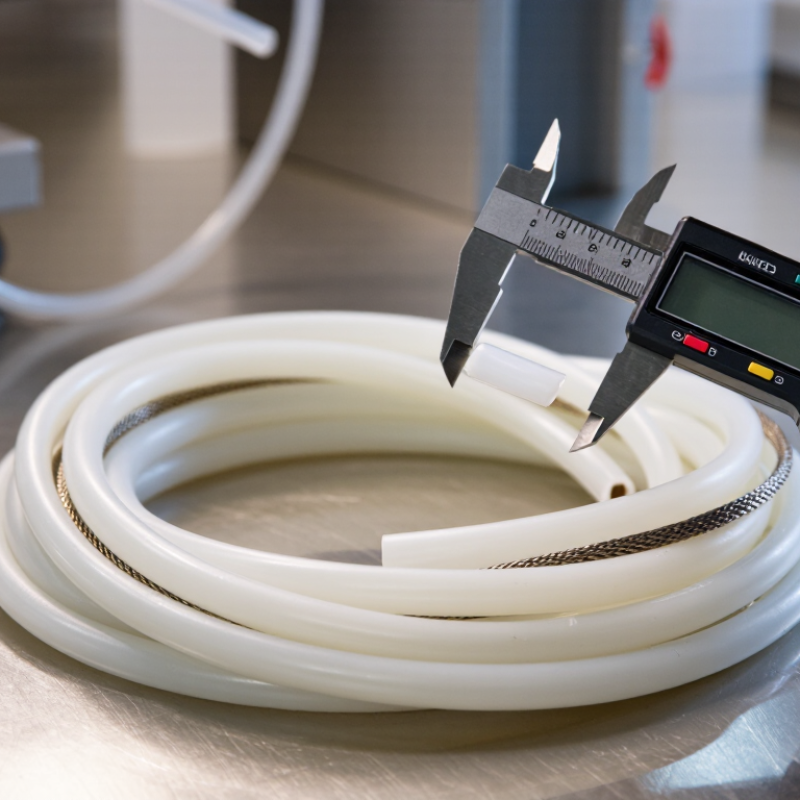
How to Choose the Best PFA Cable for Your Application?

Define the Electrical and Mechanical Requirements of Your Application

Choosing the best PFA cable starts with a measured electrical definition. Record operating voltage, peak voltage, current, frequency, and signal type. Include transient spikes, not only normal values. Peak values matter. Confirm insulation resistance, capacitance, impedance, and shielding needs. High-frequency signals may require controlled impedance and careful termination. For power circuits, conductor size must limit voltage drop and heat. Do not rely on nominal ratings alone. Check the cable rating at the actual ambient temperature and installation condition.

Mechanical requirements need the same precision. Map the cable route, minimum bend radius, flexing cycles, pull force, and available space. A cable passing through a 20 mm guide may need a smaller outside diameter. Repeated motion can damage an otherwise strong jacket. Assess abrasion, vibration, compression, moisture, oils, and cleaning chemicals. PFA handles demanding temperatures and many chemicals, but the complete cable assembly still needs review. The jacket is only one part.

Use the manufacturer’s datasheet, test reports, and tolerance limits as engineering evidence. Ask how ratings were measured. A laboratory result may not represent a tight cable tray or moving machine. Prototype the selected cable under real load, temperature, and motion. Inspect terminations after testing. Small details matter. Document every assumption, including unused conductors and shield grounding. A frequent mistake is choosing by temperature rating alone. That shortcut can hide poor flex life or excessive capacitance. Recheck the design when routing changes. Specifications can be incomplete, and field conditions are rarely as tidy as the drawing.

Compare PFA Cable Structures, Sizes, and Insulation Options

Choosing a PFA cable starts with its structure, not its temperature rating alone.

Single-core cables suit compact sensor wiring, while multi-core constructions reduce installation time. Stranded conductors bend better than solid conductors, but they add slightly higher resistance.

Shielded structures help control electrical noise near motors and converters. According to IEC 60228:2023, conductor classes define stranding and resistance requirements, so compare the stated cross-sectional area carefully.

AWG 24 and 0.2 mm² may look similar, yet they are not always interchangeable.

Size affects heat, flexibility, and voltage drop.

A 2024 fluoropolymer industry outlook estimated demand growth near 7% annually through 2030, driven partly by high-temperature electronics and chemical processing.

That growth does not make every PFA design suitable. Thin-wall PFA saves space, but it offers less mechanical margin during pulling.

Standard-wall PFA provides better abrasion resistance. Dual-layer insulation can combine a tough inner dielectric with a protective outer layer, although the larger diameter may defeat a tight routing plan.

PFA commonly supports continuous service near 260°C, but terminals, bends, and nearby materials may limit the real system temperature.

I would verify dielectric strength, conductor resistance, bend radius, and voltage rating together.

Temperature alone is an easy mistake.

In practice, the smallest cable is rarely the best cable.

Evaluate Temperature, Chemical, and Environmental Resistance

Choosing a PFA cable starts with the temperature profile, not the catalogue headline. PFA insulation commonly supports continuous exposure near 260°C, while some material data sheets report service ranges approaching -200°C. These figures describe the polymer, not the complete cable. Conductors, fillers, seals, and connectors may fail earlier. IEC 60216-1 thermal-endurance guidance also reminds engineers that aging depends on time and temperature. A brief furnace test is not enough.

Chemical resistance needs equal attention. PFA generally withstands strong acids, bases, solvents, and oxidizing chemicals better than many conventional plastics. However, concentration, pressure, temperature, and exposure time can change the result. ASTM D543 testing provides a useful comparison method, but a laboratory result is not a process guarantee. Request immersion data at the actual operating temperature. Tiny cracks around stripped sections can become the weak point.

Environmental resistance is often underestimated. Published PFA test sheets commonly report water absorption near 0.03% or lower under ASTM D570 conditions. That helps in humid equipment and washdown areas. It does not eliminate problems caused by mechanical abrasion, radiation, or repeated bending. For outdoor installations, review UV testing under ISO 4892-3 and inspect the jacket after cycling. A neat 260°C rating can mislead. I would also test a short production-length sample, because routing tension and tight bends frequently expose weaknesses that material charts miss.

Choose the Right Flexibility, Shielding, and Installation Features

How to Choose the Best PFA Cable for Your Application?

When choosing a PFA cable, start with the movement, temperature, and chemicals around it. Flexibility is not determined by insulation alone. Fine-stranded conductors usually bend more easily than solid conductors. A smaller overall diameter can also reduce resistance during repeated motion. Movement changes everything. Check the manufacturer’s minimum bend radius and compare it with your real installation. A cable flexing beside a hot valve faces different stress than one fixed inside a control cabinet.

Shielding should match the electrical environment. Foil shielding offers strong coverage against high-frequency interference. Braided shielding usually provides better mechanical strength and repeated flexing. Some designs combine both layers.

Shielding needs a purpose. Consider nearby motors, sensors, variable-speed drives, and signal levels before selecting a construction. Grounding also matters. Follow the equipment design and verified installation guidance, rather than assuming one grounding method fits every system.

Installation features can prevent early failure. Select a suitable jacket diameter, cable gland, connector, and strain-relief system. Leave enough length for service loops, but avoid loose cable near moving machinery. Protect the cable from sharp edges and forced twisting. A cable that feels flexible on a workbench may resist movement after termination. This is an easy detail to miss. Review temperature ratings, chemical exposure data, conductor size, and test documentation together. Field conditions are often less perfect than the original specification.

Verify Standards, Compatibility, and Long-Term Cable Reliability

Choosing the best PFA cable starts with evidence, not appearance. Verify conductor class, insulation thickness, voltage rating, and test conditions. IEC 60228 defines conductor resistance and flexibility classes, while IEC 60332 addresses flame propagation tests. These standards are useful filters, but they do not prove suitability for every installation.

The U.S. Department of Energy reports that motor-driven systems consume roughly 70% of industrial electricity in the United States. Cable failure in these systems can create costly downtime. Check the actual temperature profile, not only the stated maximum. PFA insulation can support service near 260°C, but terminals, jackets, bends, and nearby materials may fail earlier. Chemical compatibility also needs testing. Oil, solvents, steam, and repeated cleaning can change performance.

Look for thermal-aging, flexing, abrasion, and insulation-resistance data from independent laboratories. Ask for batch traceability and test methods. A cable that passes a short laboratory test may still weaken after thousands of heat cycles. This is the uncomfortable part. Installation quality often matters as much as material selection. Tight bends, sharp clamps, and poor strain relief can defeat a high-grade PFA design. Review the complete cable assembly, connector fit, routing distance, and expected maintenance interval before approval.

FAQS

What temperature range can a PFA cable handle?

PFA insulation commonly supports continuous exposure near 260°C. Some material data sheets approach -200°C. These figures describe insulation only. Conductors, seals, and connectors may fail earlier.

Is a 260°C rating enough for a high-temperature installation?

Not always. Heat exposure depends on duration, cycling, terminals, and nearby materials. A brief furnace test can mislead. Check the complete cable assembly.

How should chemical resistance be evaluated?

Review concentration, pressure, temperature, and exposure time. Request immersion data at the actual operating temperature. Tiny cracks near stripped sections may become failure points.

Does PFA resist moisture and outdoor exposure?

PFA commonly shows water absorption near 0.03% or lower. That helps in humid equipment and washdown areas. It does not prevent abrasion, radiation, or repeated bending damage.

How can I choose the right cable flexibility?

Match flexibility to the real movement. Fine-stranded conductors usually bend more easily than solid conductors. Compare the minimum bend radius with the installed route. Tight bends matter.

What shielding design should I select?

Choose shielding based on nearby motors, sensors, drives, and signal levels. Foil shielding offers strong high-frequency coverage. Braided shielding usually handles repeated flexing better. Combined layers may suit demanding environments.

Which installation details help prevent early cable failure?

Use compatible glands, connectors, jackets, and strain relief. Protect the cable from sharp edges and forced twisting. Leave a practical service loop. Avoid loose cable near moving machinery.

Which documents and tests should be checked before approval?

Verify conductor class, insulation thickness, voltage rating, and test conditions. Request thermal-aging, flexing, abrasion, and insulation-resistance data. Batch traceability is useful. I would still test a short production-length sample.

Why can a tested cable still fail in service?

Installation stress may exceed laboratory conditions. Tight clamps, heat cycles, poor termination, and sharp bends can weaken the cable. The chart may not match your route. Recheck the design after installation.

Conclusion

Choosing the best Pfa Cable begins with a clear understanding of your application’s electrical and mechanical requirements. Consider voltage, current, signal type, conductor size, insulation thickness, bending radius, and available installation space. Compare different cable structures and sizes to determine whether a single-core, multi-core, shielded, or specialized configuration will provide the required performance. The insulation option should also match the operating conditions and support safe, reliable transmission.

Temperature, chemical exposure, moisture, abrasion, vibration, and outdoor conditions are equally important. Select a cable with suitable flexibility for fixed or repeated-motion installation, and add shielding when protection from electromagnetic interference is necessary. Before making a final decision, verify applicable standards, connector compatibility, dimensional requirements, and installation procedures. Reviewing long-term durability, maintenance needs, and expected service life will help ensure that the Pfa Cable remains dependable and efficient throughout its operating period.


Henry

Henry

Henry is a dedicated marketing professional with a profound expertise in the company's offerings. With years of experience in the industry, he possesses an impressive understanding of the market dynamics and consumer behaviors that drive success. Henry is committed to sharing his insights through......