China has become a major sourcing base for energy infrastructure components. For global buyers, selecting reliable Energy Storage Cable suppliers requires more than comparing prices. Cable performance can influence safety, installation time, and long-term system stability.
This guide introduces leading Chinese suppliers serving energy storage projects worldwide. It focuses on practical evaluation points, including conductor materials, insulation systems, voltage ratings, temperature resistance, bend radius, and connector compatibility. Buyers should also review factory capabilities, quality-control procedures, product testing, and export experience. A polished catalog is useful, but it is not proof.
Real evidence matters.
Reliable suppliers can provide clear datasheets, batch traceability, sample support, and relevant test documentation. They should explain how their cables perform inside battery containers, power conversion systems, and outdoor cabinets. Details such as cable flexibility, flame resistance, sealing performance, and installation space often become critical during commissioning.
No supplier fits every project.
Some manufacturers offer strong customization but limited overseas service. Others provide faster delivery but fewer configuration options. This trade-off deserves careful review. Certification names alone should not decide a purchase; buyers must confirm whether documents match the exact cable model and destination requirements.
The following supplier overview is designed to support informed sourcing decisions. It combines technical considerations, manufacturing credibility, communication quality, and after-sales reliability. Market information can change, and supplier capabilities may vary over time. Therefore, buyers should verify current certifications, production capacity, samples, and contract terms before placing an order.
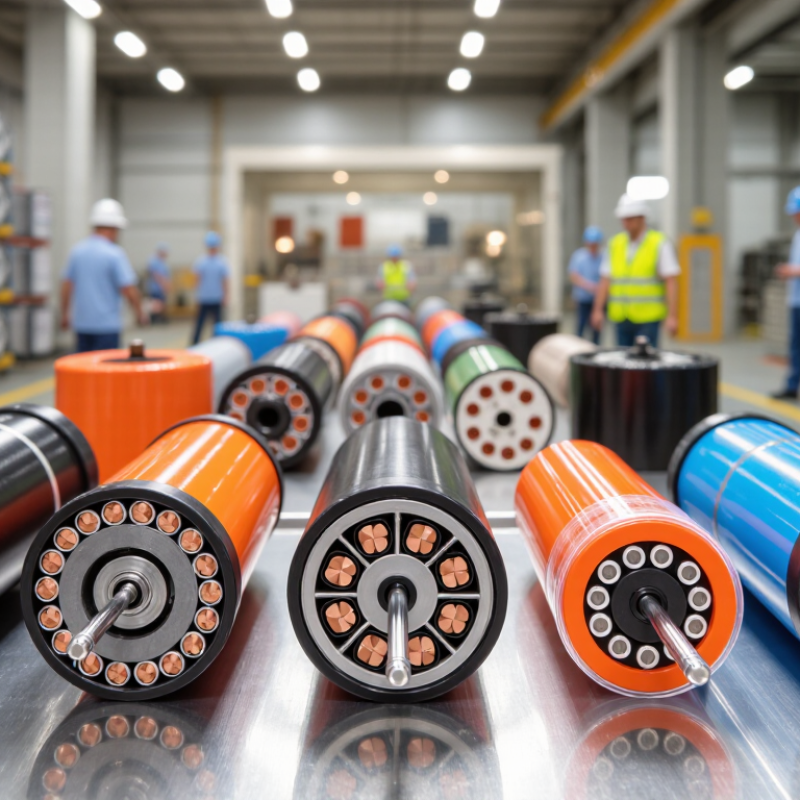
Energy storage cables connect battery cells, racks, power conversion systems, and the wider grid. They carry direct current between battery containers and inverters, while alternating-current cables link inverters with transformers and switchgear. Smaller control and communication cables support monitoring, temperature sensing, and safety systems.
Common types include flexible battery cables, rack-to-PCS cables, medium-voltage cables, grounding cables, and shielded communication cables. Copper conductors offer strong conductivity and compact dimensions. Aluminum can reduce weight and cost, but usually requires careful termination design. Insulation may use XLPE or XLPO, with flame resistance, low smoke, and strong resistance to heat and chemicals. Details matter. A cable may pass a laboratory test yet perform poorly after repeated bending or thermal cycling.
The IEA’s Renewables 2024 report indicates that global energy storage capacity must expand sixfold by 2030 to support renewable integration. This growth increases demand for cables in utility-scale battery energy storage systems, solar-plus-storage plants, microgrids, and backup facilities. Global buyers should examine voltage ratings, continuous current, short-circuit withstand, bend radius, fire testing, and certification records. Factory traceability also matters, especially for long-distance projects. A lower purchase price can become expensive after voltage losses, difficult installation, or premature insulation aging. Specifications are not always perfectly comparable. Procurement teams should verify real test conditions, not only attractive datasheets.
China Top Energy Storage Cable Suppliers for Global Buyers
China’s energy storage cable manufacturing landscape is becoming more specialized. Factories now produce cable assemblies for battery racks, power conversion systems, and containerized storage units. Production often begins with copper conductor preparation, followed by insulation extrusion, shielding, crimping, and electrical testing. Experienced manufacturers control conductor resistance and terminal pull strength at each stage. Small process errors can create heat, signal loss, or vibration failures later.
Quality evidence matters more than polished factory photos. Global buyers should request material certificates, test records, traceability documents, and samples from current production batches. Reliable facilities usually inspect insulation thickness, voltage resistance, bending performance, and connector locking force. Factory audits also reveal practical details, such as clean cable routes and protected storage areas. No manufacturing site is flawless. A capable supplier should explain its weak points and corrective actions clearly.
Tips: Define voltage, current, temperature, bending radius, and cable length before requesting quotations. Ask for drawings and sample approval records. Check whether testing covers the complete assembly, not only the cable. It is easy to overlook labeling and packaging. That mistake can delay installation. Suppliers may also interpret “custom” differently, so confirm connector orientation and pin configuration in writing. Supplier selection requires technical judgment, not only a low price.
| Cable Category | Typical Energy-Storage Application | Common Conductor | Typical Voltage Range | Key Performance Requirements | Common Reference Standards |
|---|---|---|---|---|---|
| Battery Interconnection Cable | Cell, module, rack, and battery-container connections | Stranded tinned or bare copper | Typically up to 1,500 V DC, project dependent | High flexibility, low contact resistance, vibration resistance, controlled bend radius | IEC 60228; IEC 60502-1 where applicable; IEC 60332 flame-performance series |
| PCS DC Power Cable | Battery racks to power conversion systems and DC combiner equipment | Class 5 or Class 6 flexible copper; aluminium may be used for selected fixed installations | 600/1,000 V DC or 1,000/1,500 V DC, according to system design | High current capacity, thermal stability, insulation reliability, short-circuit withstand capability | IEC 60228; IEC 60502-1; IEC 60332 series |
| Flexible Industrial Power Cable | Mobile battery containers, movable racks, maintenance loops, and vibration-prone installations | Fine-stranded copper | Commonly 300/500 V to 1,000/1,000 V | Repeated bending, torsion resistance, oil and abrasion resistance, low-temperature flexibility | IEC 60228; IEC 60332 series; application-specific industrial cable specifications |
| AC Output Cable | Power conversion system to switchgear, transformer, and grid-connection equipment | Copper or aluminium conductor | Low-voltage or medium-voltage rating selected by the project | Current-carrying capacity, insulation coordination, electromagnetic compatibility, installation durability | IEC 60228; IEC 60502-1 for low-voltage power cables; IEC 60502-2 for selected medium-voltage cables |
| BMS and Control Cable | Battery-management systems, temperature sensors, contactors, and control cabinets | Tinned copper or bare copper, often with twisted pairs | Extra-low voltage and signal-level circuits | Signal integrity, shielding options, low capacitance, flame performance, EMC compatibility | IEC 60228; IEC 60332 series; IEC 60754 and IEC 61034 where low-smoke, halogen-free construction is specified |
| Fire-Resistant or Low-Smoke Cable | Indoor battery rooms, commercial buildings, transport hubs, and other high-occupancy areas | Copper conductor with halogen-free or fire-resistant insulation and sheath options | System-specific low-voltage ratings | Reduced smoke and corrosive gas emission, flame retardancy, circuit integrity where specified | IEC 60331; IEC 60332; IEC 60754; IEC 61034, subject to the required cable construction |
| Prefabricated Cable Assembly | Rack wiring, containerized systems, busbar connections, and fast installation projects | Copper cable with crimped terminals, molded connectors, or customized lugs | Based on the cable and connector system selected | Correct polarity, pull-out strength, contact resistance, IP protection, traceability, and dimensional consistency | IEC 60228; connector and terminal requirements defined by the system integrator |
| Manufacturing Dimension | Industry Characteristics | Relevance for Global Buyers |
|---|---|---|
| Product Scope | Manufacturers commonly offer battery cables, DC power cables, control cables, fire-performance cables, connectors, and cable assemblies. | Buyers can source both standard cable lengths and project-specific assemblies from the same supply chain. |
| Material Supply | China has a large domestic copper-processing, polymer-compounding, conductor-drawing, and cable-component manufacturing base. | Material availability supports a broad range of conductor sizes, insulation compounds, colors, and sheath constructions. |
| Customization Capability | Common customization includes conductor cross-section, insulation material, sheath color, printing, connector type, terminal design, and cable length. | Suitable for containerized battery energy-storage systems, modular racks, and equipment with non-standard interfaces. |
| Quality-Control Processes | Typical controls include conductor resistance, dimensional inspection, insulation resistance, voltage testing, spark testing, tensile testing, and visual inspection. | Buyers should request inspection records, batch traceability, approved drawings, and type-test documentation for critical projects. |
| Export Readiness | Export-oriented production commonly supports English documentation, international packaging, private labeling, and project-based documentation. | Purchase orders should clearly define destination-market standards, plug or terminal requirements, labeling, packaging, and customs documentation. |
| Certification Approach | Compliance depends on the product design and destination market; common references include IEC, EN, UL, CSA, and local electrical codes. | A factory or product certificate should not be treated as universal approval; the exact cable construction and end-use application must be verified. |
| Typical Buyer Evaluation Criteria | Technical compliance, conductor quality, temperature rating, flexibility, delivery capability, testing records, tooling capacity, and after-sales support. | A complete technical specification and sample approval process reduces the risk of incompatible cables in high-current battery systems. |
Note: Voltage ranges, insulation systems, certifications, and test requirements are application dependent. Final selection should be confirmed against the project design, installation method, destination-market regulations, and the applicable cable standard.
Choosing Chinese energy storage cable suppliers requires more than comparing price lists. Start with application data: battery voltage, continuous current, peak load, ambient temperature, and required bend radius. A capable supplier should explain conductor size, insulation material, shielding, and connector compatibility in clear technical language. Vague answers are a warning sign.
Request recent test reports from accredited laboratories. Check insulation resistance, flame performance, temperature endurance, and voltage-drop results. Traceable raw materials matter too. Ask how copper batches, insulation compounds, and finished cables are recorded. Factory audits can reveal practical details, such as clean crimping areas, labeled test stations, and protected storage. Small details often predict shipment quality.
Production samples should match the approved drawing, not merely look similar. Confirm tolerances, cable length, terminal plating, pulling strength, and packaging before placing a larger order. Also review quality agreements, inspection plans, corrective-action procedures, and delivery records. A supplier that accepts independent inspection usually shows stronger accountability. However, even a detailed checklist can miss communication delays or design changes. Keep technical decisions in written records, and review them with an engineer who understands battery systems. Price is important, but unstable insulation quality can create expensive rework later. Shorter lead time is not always better.
China Top Energy Storage Cable Suppliers for Global Buyers
Leading suppliers for global energy storage projects must offer more than low pricing. They need stable copper conductors, flexible insulation, precise crimping, and documented testing. According to the IEA’s Batteries and Secure Energy Transitions report, global battery storage additions grew by 130% in 2023, reaching about 42 GW. This rapid growth increases pressure on cable quality and delivery reliability.
Experienced suppliers should support different voltage levels, cable lengths, bend radii, and connector designs. They should provide flame-retardant, UV-resistant, and temperature-tested products for outdoor containers and indoor battery rooms. Compliance with relevant IEC requirements matters, especially IEC 62930 for certain photovoltaic and energy cable applications. Batch traceability is also essential. A clear test report should identify conductor size, insulation material, voltage rating, and thermal performance. Small details matter.
No supplier gets every detail right. Buyers should inspect samples, review factory testing, and confirm installation conditions before placing large orders. A missing temperature assumption can create trouble later.
Tips: Request a complete technical file, including material certificates, aging tests, crimping guidance, and packing photos. Compare suppliers by failure prevention, not only by unit price. Check whether replacement cables can be produced consistently after twelve months.
For international energy storage projects, cable export begins with destination-market requirements. Buyers should confirm voltage ratings, fire performance, temperature range, and connector standards before ordering. A cable suitable for a warehouse may fail in an outdoor container system. Certification is not one-size-fits-all. Depending on the market, buyers may request IEC test reports, UL recognition, RoHS compliance, or other accepted documentation. Always verify the current rules with a qualified local assessor.
Reliable suppliers provide more than a certificate. They should show conductor material, insulation composition, cross-section tolerance, bend radius, and resistance data. Ask for batch traceability, factory inspection records, and sample testing before mass production. During practical checks, measure crimp strength and inspect insulation around the terminal. Small surface cuts can become serious faults after repeated thermal cycling. Packaging also matters. Moisture barriers and clear reel labels reduce confusion during overseas transport.
Export experience often reveals weak points that product sheets miss. Confirm customs codes, commercial invoices, packing lists, and country-of-origin documents early. Delivery terms should define responsibility for damage, testing, and delays. Some suppliers respond quickly but provide incomplete evidence. That is a warning. One limitation remains: laboratory reports may not represent every production batch. Buyers should request a recent sample and an independent inspection when the project is critical. Perfect documentation does not replace physical verification.
Manufacturers produce cable assemblies for battery racks, power conversion systems, and containerized storage units.
Production may include copper preparation, insulation extrusion, shielding, crimping, and electrical testing.
Poor control can cause overheating, signal loss, or connection failure during vibration and operation.
Request material certificates, test records, traceability documents, sample reports, and current batch evidence.
Check insulation thickness, voltage resistance, bending performance, temperature range, and connector locking force.
Define voltage, current, cable length, temperature, bending radius, connector orientation, and pin configuration.
Testing only the cable may miss crimping, connector, locking, or signal problems. The full assembly matters.
Buyers may need flame-retardant, UV-resistant, and temperature-tested cables for specific installation conditions.
Compare testing depth, traceability, corrective actions, delivery consistency, and replacement capability after twelve months.
Confirm clear labels, protected terminals, suitable packing, and accurate cable identification. Small errors can delay installation.
Energy Storage Cable is a critical component in modern battery energy storage systems, connecting battery modules, power conversion equipment, control units, and grid interfaces. This article explains the main cable types, including battery, power, communication, and flexible connection cables, along with their core applications in renewable energy integration, backup power, microgrids, and utility-scale storage. It also introduces China’s manufacturing landscape, highlighting the industry’s capabilities in material selection, customized design, automated production, and large-volume supply.
For global buyers, selecting a reliable Chinese supplier requires careful evaluation of product performance, electrical safety, temperature resistance, flexibility, durability, production consistency, and technical support. The article further discusses supplier capabilities for international projects, including engineering cooperation, customized specifications, quality control, packaging, logistics, and after-sales service. Export documentation, internationally recognized certifications, testing procedures, and compliance with destination-market requirements are also essential considerations for ensuring safe installation, dependable operation, and long-term project value.

Lucky Pioneer