Choosing the right Silicone Rubber Cable in 2026 requires more than comparing prices or reading a supplier’s brochure. Global buyers must examine temperature ratings, insulation thickness, conductor flexibility, voltage performance, and production consistency. A cable may remain soft beside a hot motor, yet crack after repeated bending in a cold warehouse. Small details matter.
In practical purchasing work, engineers often review cable samples under heat, moisture, vibration, and sharp bending conditions. They also check conductor materials, labeling accuracy, batch records, and test reports before approving a supplier. Reliable manufacturers should explain their silicone compound, curing process, tolerances, and quality controls clearly. Ask for evidence.
Regional requirements can also influence the final decision. Equipment used in medical systems, industrial ovens, robotics, solar installations, or marine environments may need different flame, chemical, or environmental performance. Buyers should confirm applicable standards with qualified local professionals, because certification expectations can vary between markets. A familiar certificate is not automatically sufficient everywhere.
The best selection process connects technical requirements with real operating conditions. Measure the installation temperature, movement frequency, pulling force, and available space. Discuss delivery stability, minimum order quantities, customization, and after-sales support. A lower initial quote may create higher replacement costs later. That lesson is easy to overlook.
No cable choice is perfect. Unexpected abrasion, routing errors, or supplier changes can still create problems. A careful buyer leaves room for testing, documentation, and review. This guide introduces a practical framework for comparing Silicone Rubber Cable suppliers with greater confidence, clearer evidence, and fewer costly assumptions.
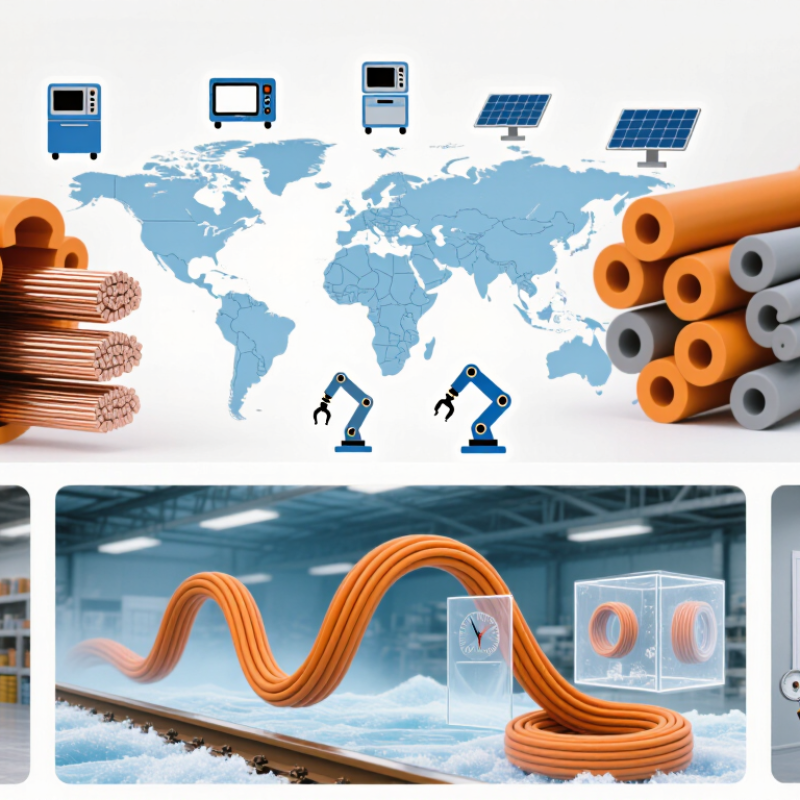
Silicone rubber cable uses silicone elastomer as its insulation or outer sheath. The material remains flexible across a wide temperature range, often from about -60°C to 180°C, depending on construction and certification. It also resists ozone, ultraviolet exposure, moisture, and repeated bending. That combination explains its use in industrial ovens, medical equipment, lighting systems, renewable-energy installations, and control cabinets worldwide.
Global electrification is increasing the need for specialized wiring. The International Energy Agency reported that solar photovoltaic capacity additions reached about 420 GW in 2023. Harsh outdoor conditions make insulation selection more important. A silicone cable can stay soft near cold storage equipment, then tolerate heat near motors or lamps. It is easier to route through tight spaces. That saves installation time in real projects.
However, heat resistance does not mean unlimited protection. Silicone is softer than many thermoplastic materials and may tear under sharp mechanical stress. It can also attract dust in certain environments. My practical preference is to check conductor size, voltage rating, flame performance, oil exposure, bending cycles, and applicable IEC or local standards together. Grand View Research valued the global wire and cable market at over USD 200 billion in recent reporting, but market size alone cannot determine the correct cable. Application details matter more. Often, the first specification is incomplete.
Choosing silicone rubber cable starts with the application, not the catalogue title. Global electricity demand is expected to grow by about 3.4% annually from 2024 to 2026, according to the IEA Electricity 2024 report. This growth increases demand for reliable wiring in industrial equipment, power systems, and renewable installations. Define the rated voltage first. Then confirm conductor size, current capacity, insulation temperature, flexibility, and installation environment. IEC 60228 identifies conductor classes, including flexible Class 5 and Class 6 designs. IEC 60245-3 also covers heat-resistant silicone insulated cables up to 450/750 V.
Tips: Do not choose only by temperature rating. A 180°C cable may still fail under oil, vibration, sharp bending, or repeated movement. Check the datasheet for continuous temperature, short-term temperature, bending radius, and outer diameter. Confirm whether the cable is intended for fixed wiring or flexible service. I would also request test records, batch traceability, and clear marking. These details often reveal more than a low price.
A frequent mistake is matching current capacity before checking installation conditions. Ambient heat, bundled cables, and long cable runs can reduce allowable current. Use the manufacturer’s derating tables, then verify conductor resistance against IEC 60228 values. For international purchasing, compare the actual certification scope, not just a printed logo. Samples should be tested after bending, heating, and voltage exposure. The specification may look complete, but one missing environmental condition can change the correct cable choice.
| Application Profile | Typical Conductor Size | Conductor Construction | Insulation Temperature Rating | Typical Voltage Class | Maximum Conductor Resistance at 20°C | Typical Finished Outside Diameter | Recommended Minimum Dynamic Bend Radius | Key Selection Consideration |
|---|---|---|---|---|---|---|---|---|
| Sensor, control and internal wiring | 0.20–0.50 mm² | Flexible stranded copper; Class 5 construction according to IEC 60228 | −60°C to +180°C, subject to the cable design and applicable certification | 300/500 V or lower, depending on the approved cable type | 39.0 Ω/km maximum for 0.50 mm² Class 5 copper | Approximately 2.0–3.5 mm | About 6–8 × finished cable diameter | Prioritize flexibility, small diameter and low-temperature performance. Confirm stripping and terminal compatibility. |
| Small appliances and lighting equipment | 0.75–1.00 mm² | Flexible stranded copper with silicone rubber insulation | −60°C to +180°C, where specified by the product certification | 300/500 V | 26.0 Ω/km maximum for 0.75 mm²; 19.5 Ω/km maximum for 1.00 mm² Class 5 copper | Approximately 3.0–4.5 mm | About 6–8 × finished cable diameter | Check the required national plug, appliance, flammability and certification requirements before purchasing. |
| Heating equipment and high-temperature wiring | 1.00–2.50 mm² | Flexible tinned or bare copper, selected according to corrosion and termination requirements | Commonly 180°C; higher ratings require specific construction and test evidence | 300/500 V or 450/750 V | 19.5 Ω/km maximum for 1.00 mm²; 7.98 Ω/km maximum for 2.50 mm² Class 5 copper | Approximately 4.0–7.0 mm | About 8–10 × finished cable diameter | Use heat-resistant terminals and allow for ampacity derating when the cable operates continuously at elevated temperature. |
| Motor, generator and industrial equipment connections | 1.50–6.00 mm² | Fine-stranded flexible copper; optional tinned conductor for humid or corrosive environments | Typically −60°C to +180°C for qualified silicone cable constructions | 450/750 V or 0.6/1 kV, depending on the cable standard | 13.3 Ω/km maximum for 1.50 mm²; 3.30 Ω/km maximum for 6.00 mm² Class 5 copper | Approximately 5.0–11.0 mm | About 8–10 × finished cable diameter | Evaluate vibration, oil exposure, mechanical protection, short-circuit conditions and terminal temperature. |
| Battery, inverter and energy-storage connections | 6.00–35.00 mm² | Highly flexible stranded copper; insulation and sheath must be selected for the DC system voltage | Often −40°C to +125°C or up to +180°C, depending on the complete cable design | 600 V DC, 1,000 V DC or another verified system rating | 3.30 Ω/km maximum for 6.00 mm² Class 5 copper; larger sizes require the applicable IEC 60228 value | Approximately 9.0–22.0 mm | About 8–12 × finished cable diameter | Size the conductor for continuous current, voltage drop, fault current and enclosure temperature; do not rely on cross-section alone. |
| Robotics and repeated-flex applications | 0.25–4.00 mm² | Extra-fine stranded copper with a specified flex-life construction | Usually −40°C to +180°C; the permitted temperature depends on movement and cycle rate | 300/500 V or 600/1,000 V, according to the tested cable design | Resistance depends on conductor size and construction; verify against IEC 60228 or the declared product standard | Approximately 3.0–10.0 mm | Use the manufacturer’s tested value; static bend-radius rules are not sufficient | Confirm travel distance, bend radius, torsion, acceleration, cycle count, shielding and cable-chain compatibility. |
| Outdoor, humid and chemically exposed installations | 0.75–6.00 mm² | Silicone-insulated cable with suitable sheath, sealing and conductor plating | Typically −60°C to +180°C for the insulation; sheath limits may be lower | 300/500 V to 0.6/1 kV, according to the approved design | Use the applicable IEC 60228 maximum for the selected conductor size | Approximately 4.0–12.0 mm | About 8–12 × finished cable diameter | Silicone is not automatically resistant to every oil, fuel, solvent or UV condition. Request chemical and environmental test data. |
2026 How to Choose Silicone Rubber Cable for Global Buyers?
Which Temperature, Voltage, and Flexibility Ratings Matter?
Silicone rubber cable suits equipment exposed to heat, cold, vibration, or repeated movement. Its temperature rating deserves careful attention. Many cables operate from about -60°C to 180°C, while specialized designs may reach 200°C. Do not trust the highest number alone. Check whether it applies to continuous operation, short-term exposure, or the complete cable assembly.
Voltage ratings must match the system, not just the conductor size. A 300/500 V cable may fit light industrial equipment, while machinery often requires 450/750 V or higher. Confirm insulation thickness, test voltage, and installation conditions. Heat can reduce service life when the cable runs near its maximum rating. That detail is often missed.
Flexibility depends on more than soft insulation. Look for fine-stranded copper conductors, a stated minimum bend radius, and tested flexing performance. A cable bent around a 40 mm pulley needs different construction from one installed once inside a control cabinet. Keep it moving.
In practical purchasing work, I compare datasheets with the real route, ambient temperature, load current, and movement pattern. A supplier’s sample may feel flexible by hand but perform poorly after repeated bending. That judgment can be imperfect. Ask for test evidence, dimensional tolerances, flame behavior, and material consistency before approving a large order. A clear technical file also helps engineers in different countries review the same cable without guessing.
When choosing silicone rubber cable in 2026, global buyers should compare evidence, not attractive labels. Silicone insulation handles heat, vibration, and tight bends well. However, performance depends on conductor quality, wall thickness, and curing control. Check the rated voltage, temperature range, flexibility, and flame behavior. IEC 60228 testing helps verify conductor resistance and construction. IEC 60332 evaluates flame spread. IEC 60754 and IEC 61034 may matter in low-smoke, low-corrosive environments. A label is not proof.
Tips: Request current test reports, certificates, and factory inspection records. Confirm the certificate matches the exact cable structure. Check conductor size, insulation thickness, and rated temperature. Ask whether testing covered the finished cable, not only the raw silicone compound. Regional marks can support market access, but their scope differs. Never treat one approval as global acceptance.
In practice, I compare certification numbers with the issuing laboratory’s public records. I also inspect batch traceability, marking durability, and sample consistency. A reliable supplier should explain failed tests without avoiding details. That conversation often reveals more than a polished document. Some buyers focus only on fire resistance and miss oil exposure or repeated bending. I have made that mistake in early evaluations. Standards reduce uncertainty, but they cannot replace application testing. Leave room for review. Conditions change.
The chart compares representative upper conductor-temperature ratings used in widely referenced flexible-cable standards. IEC 60227 commonly covers PVC-insulated cables up to 70°C, IEC 60245 includes rubber-insulated cable types up to 90°C, and UL 62 flexible-cord constructions may reach 105°C depending on the specific type.
These figures are reference values rather than automatic certification results. Global buyers should verify the exact cable designation, voltage rating, flame-test performance, mechanical requirements, environmental conditions, and the certification or conformity-assessment route required in the destination market.
Silicone rubber cable performs well in heat, cold, vibration, and repeated bending. Global buyers should match the cable to the real operating environment. Check voltage, conductor size, insulation thickness, temperature range, and bending frequency.
A cable used beside a hot motor needs different protection than one inside a control cabinet. Request test reports, production samples, and clear drawings before approval. Small details matter.
Supplier evaluation should include material traceability, process control, inspection records, and response speed. Ask how the supplier handles rejected batches and design changes. Cost comparisons must include tooling, packaging, testing, freight, duties, and possible rework. A low unit price can still become expensive.
Delivery planning needs realistic lead times, minimum order quantities, production capacity, and shipping options. Confirm whether the supplier can provide partial shipments when schedules change. Do not trust an attractive promise too quickly.
Tips:
Compare at least three written quotations. Specify the delivery term and destination. Keep one approved sample for inspection. Check cable markings and package labels before shipment. Add buffer time for customs and quality review. I once overlooked packaging space in a cost estimate; the cable arrived safely, but storage became difficult. That mistake was avoidable.
It uses silicone elastomer for insulation, jacketing, or both. It remains flexible across wide temperature ranges. It stays soft in cold areas.
It resists heat, ozone, ultraviolet exposure, moisture, and repeated bending. This makes it suitable for ovens, lighting equipment, and outdoor systems.
Many designs operate from approximately -60°C to 180°C. The actual range depends on construction, certification, and installation conditions. Ratings are not unlimited.
Common applications include industrial equipment, medical devices, control cabinets, renewable-energy systems, and lighting installations. Tight routing is often easier.
Check voltage rating, conductor size, current capacity, temperature rating, flexibility, bending radius, and outer diameter. Also review oil exposure and flame performance.
No. A cable rated for 180°C may still fail under oil, vibration, sharp bending, or constant movement. The environment matters more than one number.
Consider ambient heat, cable bundles, and long cable runs. These conditions can reduce allowable current. Use derating tables and verify conductor resistance.
Request test records, batch traceability, clear cable marking, and certification details. Samples should undergo bending, heating, and voltage exposure tests.
Buyers often match current capacity before checking installation conditions. My initial choice may still be wrong. One missing detail can change everything.
Choosing the right Silicone Rubber Cable in 2026 requires a clear understanding of performance, safety, and supply conditions. Designed to remain flexible and reliable in demanding environments, silicone cables are widely used where high or low temperatures, vibration, moisture, and repeated movement may affect ordinary cable materials. Global buyers should first define the application, conductor size, insulation structure, temperature range, voltage rating, flame performance, flexibility, and environmental resistance required for safe and stable operation.
A careful comparison of safety standards and internationally recognized certifications can help verify product quality and suitability for different markets. Buyers should also assess supplier experience, manufacturing consistency, testing procedures, customization capabilities, minimum order quantities, pricing, packaging, and delivery schedules. Instead of choosing solely by the lowest cost, it is better to evaluate total value, including service life, technical support, documentation, and supply reliability. A well-matched cable specification and dependable supplier can reduce installation risks, improve equipment performance, and support long-term purchasing efficiency.

Lucky Pioneer